Left and right glove sensors
Planned to capture acceleration, speed, orientation, rotation, punch path, launch timing, contact-event timing, combinations, retraction, guard return, and differences between the boxer’s left and right hands.
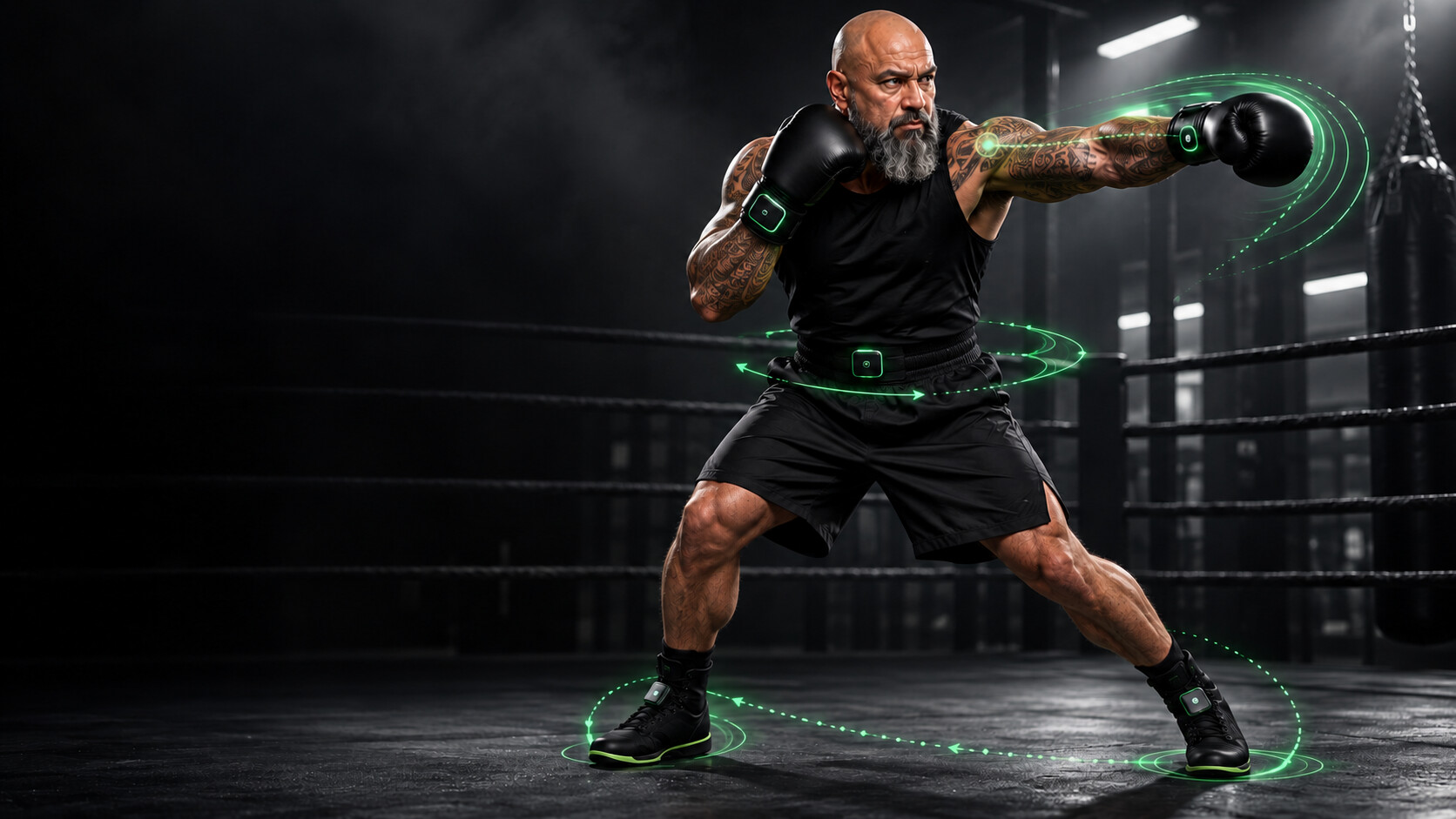
FIVE-SENSOR BOXING TRAINING
Five synchronized wearable sensors are planned to connect what the hands do with the boxer’s stance, foot rhythm, hip rotation, body level, timing, and recovery—so training can evaluate the complete movement, not only the glove.
TWO HANDS • TWO FEET • ONE CENTER
Each chip records motion on the same timeline. Together, the planned system can compare when the feet move, when the hips rotate, when each glove accelerates, where the movement peaks, and how the boxer returns to stance.
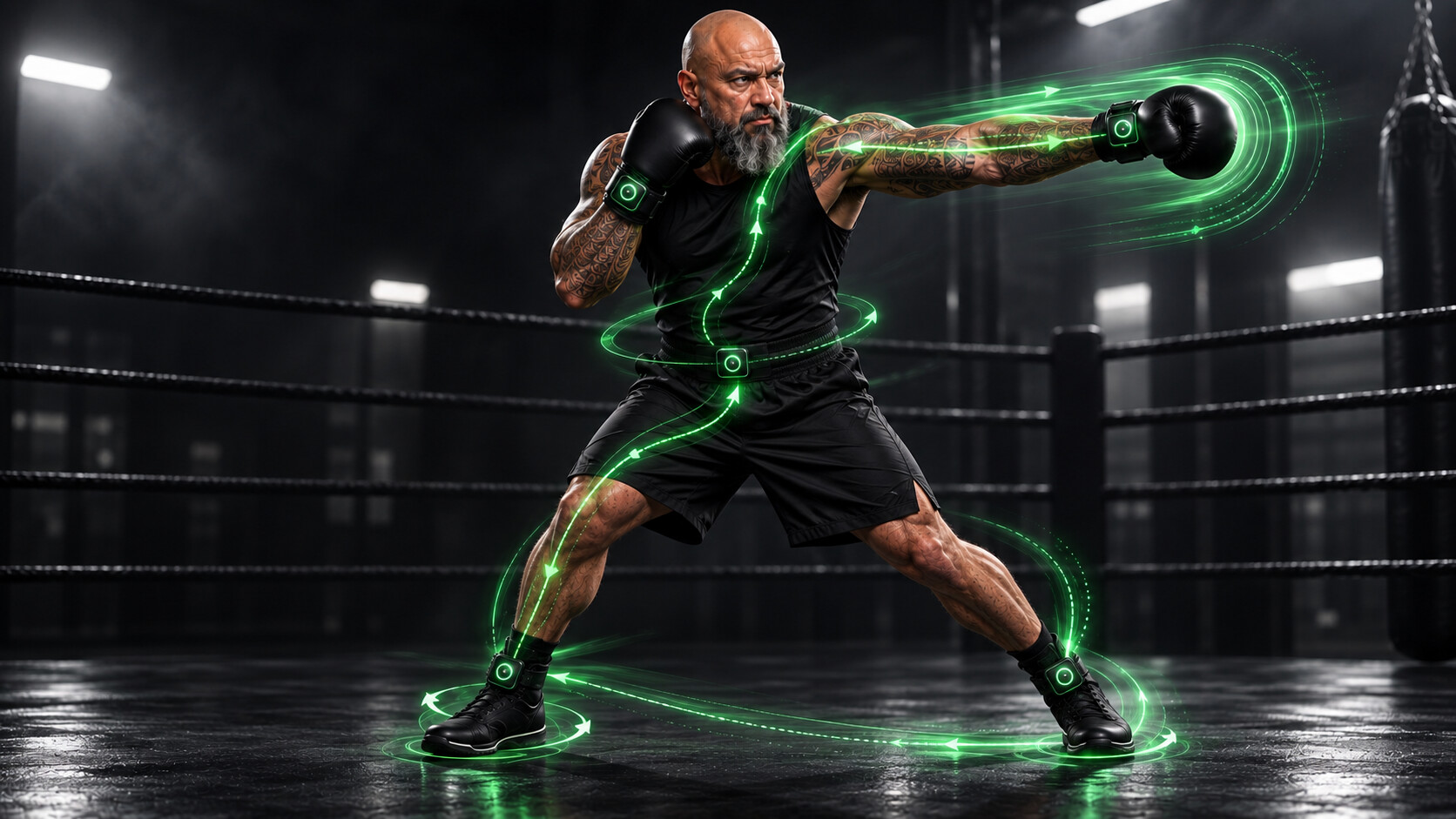
Planned to capture acceleration, speed, orientation, rotation, punch path, launch timing, contact-event timing, combinations, retraction, guard return, and differences between the boxer’s left and right hands.
Planned to analyze foot acceleration and rotation, step timing, pivots, stance changes, lead-foot and rear-foot rhythm, movement direction, resets, balance, and whether the feet support or fight the punch.
Centered below the belly button to follow hip rotation, torso turn, body-level changes, forward and lateral movement, acceleration, stability, and the timing of the boxer’s center relative to both hands and feet.
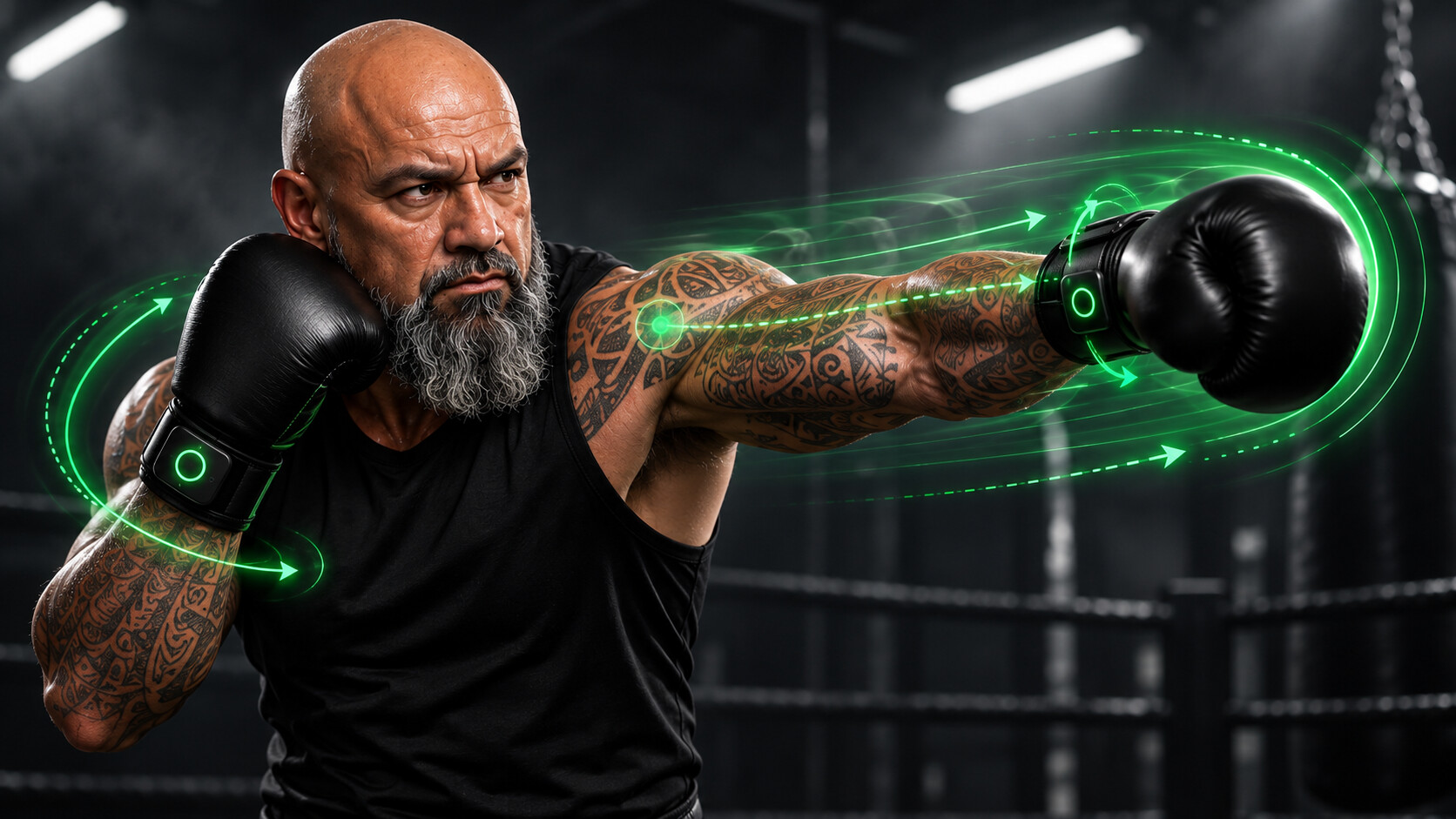
IMPACT-EVENT DETECTION + PERSONALIZED POWER INDEX
A sudden change in glove acceleration and rotation can help identify the likely moment of contact. The planned system could combine the glove’s approach speed, acceleration, rotation, hip-to-hand sequence, foot contribution, and contact deceleration signature to produce a predicted relative impact-intensity or power score for that boxer.
That score could compare one punch with the boxer’s own previous punches, track improvement, and show whether better timing produced a stronger predicted result. Calibration against verified readings from an appropriate external instrumented bag or force target could make the personal estimate more useful.
PUNCH RECOGNITION + PERSONAL COACHING
Planned motion-pattern recognition can classify common punches and combinations, then evaluate the launch, path, rotation, contact timing, retraction, balance, and recovery that made each repetition different.
Lead-hand launch speed, directness of path, snap, extension pattern, guard return, lead-foot timing, and repeatability.
Rear-hand acceleration, rear-foot pivot, hip-to-hand sequence, shoulder turn, extension pattern, impact timing, and reset.
Glove arc, wrist and forearm rotation, hip turn, lead-foot pivot, punch width, level, speed, and return to guard.
Drop or level change, leg-drive timing, upward glove path, hip rotation, torso rise, elbow-path pattern, and recovery.
Entry angle, glove arc, weight transfer, torso rotation, rear-foot contribution, balance, and defensive recovery.
Level change, step-in timing, hip rotation, glove path, stance stability, exit movement, and return to position.
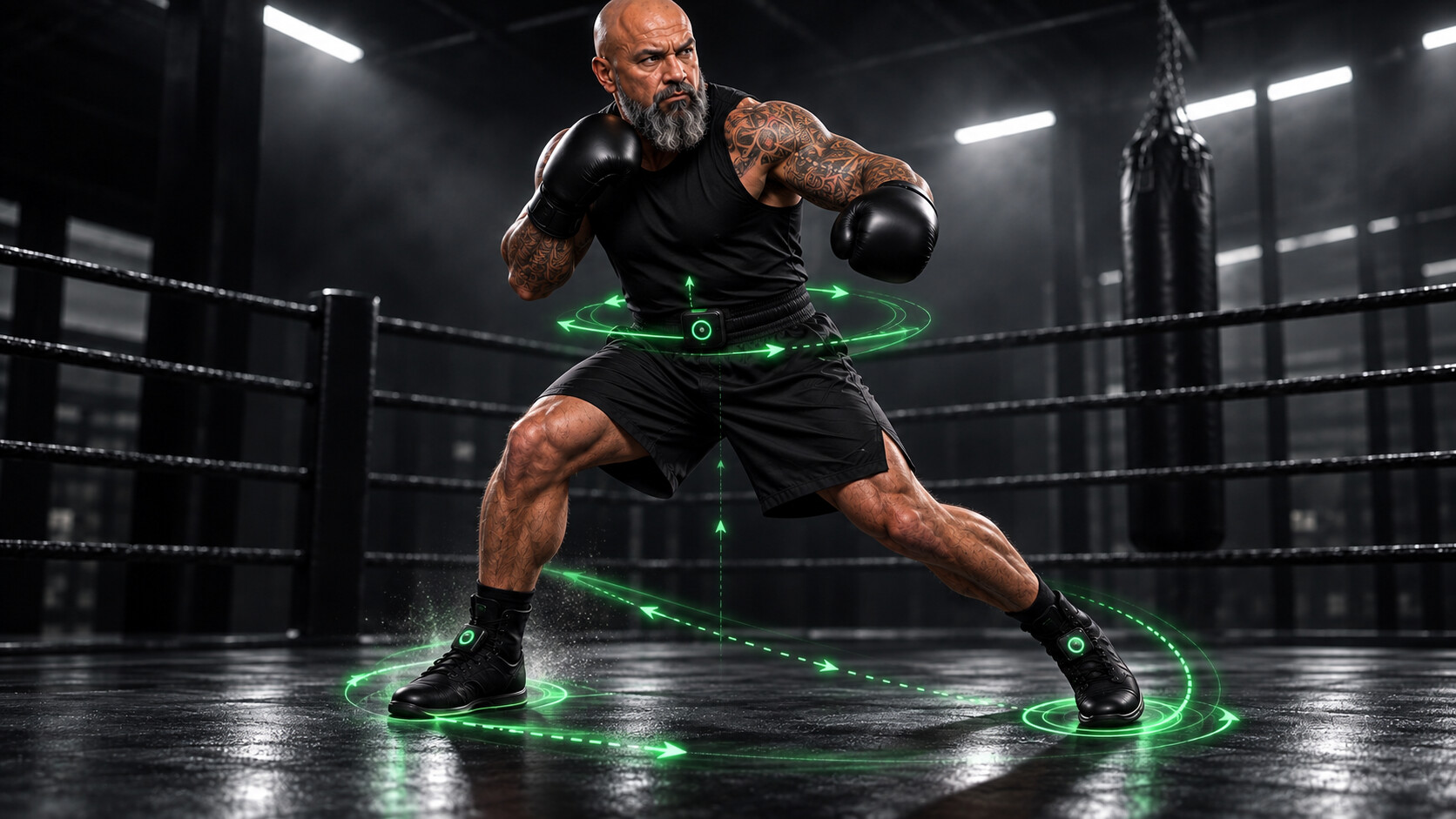
STANCE • TEMPO • RHYTHM • ROTATION
The two shoelace sensors are planned to compare the rhythm of the feet with the rotation of the waist sensor and the acceleration of the gloves. That timing can show whether the boxer plants, pivots, steps, turns, and resets as one connected action.
SENSOR DATA + OPTIONAL BODY TRACKING
Wearable motion data is strongest for movement, acceleration, rotation, timing, and sequencing. Optional phone or tablet body tracking could add the joint and posture information needed for more detailed technique coaching.
Compare glove travel, speed buildup, peak extension pattern, rotation, braking, retraction speed, and return to guard.
Body tracking could evaluate elbow extension, elbow flare, hand position, shoulder relationship, and whether the arm overextends or stays too bent.
Study whether the boxer lowers enough, bends through the legs, rotates the hips, drives upward, follows the intended glove path, and recovers balance.
Compare cadence, step timing, pivots, pauses, punch-to-punch rhythm, combination tempo, stance resets, and changes across a round.
Add head position, torso angle, defensive slips or rolls, guard height, knee bend, posture, and body alignment to the synchronized motion record.
Compare early and late rounds to identify slower hands, shorter extension, reduced hip turn, wider punches, delayed feet, falling guard, or slower recovery.
PERSONAL BOXING DEVELOPMENT
The planned learning system could build personal baselines by stance, hand, punch, combination, drill, round, and training goal. Coaching would compare the athlete with their own approved targets and progress instead of declaring that every boxer must move exactly the same way.
Capture controlled repetitions for each punch, stance, combination, and footwork drill.
Use repeatable movements, coach-approved examples, and validated training results as references.
Receive planned visual, voice, score, and optional haptic guidance for timing, path, rotation, balance, and recovery.
Compare speed, rhythm, sequencing, predicted impact intensity, consistency, and technique changes over time.
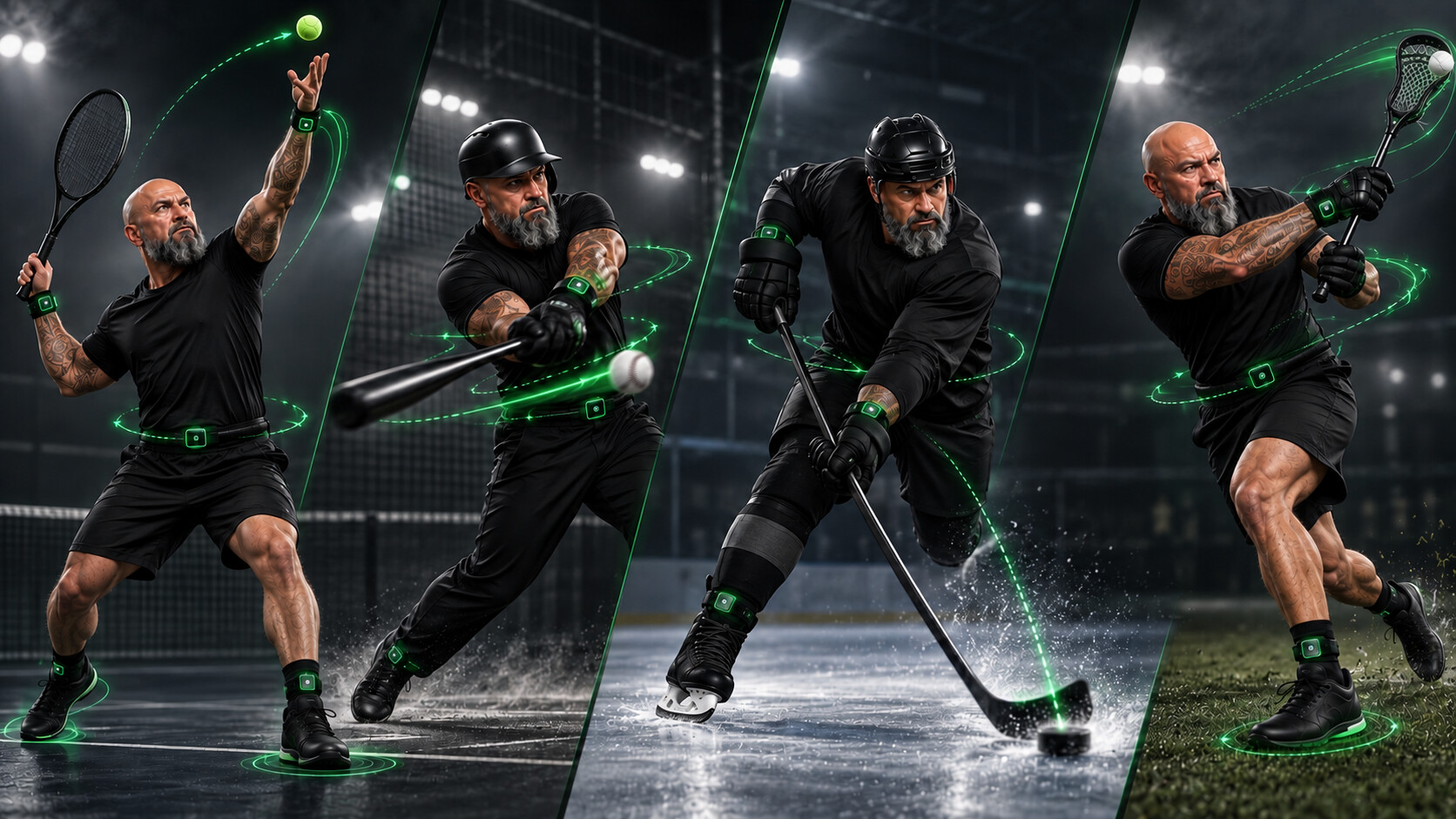
BEYOND BOXING
After boxing, the 360 Sports AI concept can explore movement training for sports built around a racket, bat, stick, paddle, throw, strike, or full-body sequence.
These are future development concepts—not currently available products. Sport support, sensors, placements, measurements, and coaching features may change after research, prototyping, safety review, and validation.
360 BOXING AI QUESTIONS
No. 360 Boxing AI is the planned next 360 Sports AI project. The hardware, measurements, coaching, and sensor placement remain concepts until prototyping, safety testing, athlete testing, and validation are completed.
The planned system uses one compact sensor at each glove, one secured over each shoelace, and one centered on the front of the boxing-short waistband below the belly button.
The wearable sensors could identify an impact event and support a predicted relative impact-intensity or power score using glove speed, acceleration, rotation, body sequencing, and the contact deceleration signature. They would not directly measure force or PSI. True PSI requires validated force data and a known contact area from appropriate external test equipment.
The planned training system would use motion patterns and timing to help classify jabs, crosses, hooks, uppercuts, overhands, body shots, and combinations, then compare path, speed, rotation, sequencing, recovery, and repeatability.
The five sensors could evaluate glove travel, rotation, body level changes, hip timing, foot drive, and recovery. Optional phone or tablet camera body tracking could add elbow extension, knee bend, torso angle, guard position, and depth-of-dip information that wearable motion sensors alone cannot directly measure.
THE NEXT 360 TRAINING SYSTEM
360 Boxing AI is planned as the next step beyond the golf swing.